
The government has at last commenced important structural reforms.
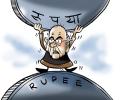
Fiscal deficit has a bearing on sovereign rating of the country as well as the debt market.

'The first and most basic responsibility of any government is to protect its people from external threats and internal harm.' 'Budget 2025-2026 has to focus on meeting this responsibility,' asserts R Jagannathan.

The Union Budget for 2004-05, which is being viewed as a "litmus test" for the Congress-led government, may unveil the roadmap for wiping out revenue deficit well in advance by 2007 and a subsequent reduction in fiscal deficit to manageable limits.

There are various estimates of India's debt to GDP ratio, but the consensus is that that it would be over 80 per cent at the end of the current fiscal year.

This will be the first full-year Budget of the BJP-led National Democratic Alliance government since it came to power for a third consecutive term in July last year.

India's economy is likely to grow by 6.5 per cent in the current and the next financial year, an EY report said, attributing lower than anticipated expansion in the September quarter to fall in private consumption expenditure and gross fixed capital formation. Real GDP growth eased to a seven-quarter low of 5.4 per cent in July-September -- the second quarter of the current 2024-25 fiscal year.

The government has utilised 'escape clause' under the FRBM Act which provides it leeway for relaxation of fiscal deficit roadmap during time of stress.

To enable widen the fiscal deficit beyond the permissible limit under the present legislation, the government may have to propose amendment to the FRBM Act in the Finance Bill.
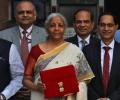
'The finance minister missed yet another opportunity to simplify the income tax structure in the Budget.' 'This was an opportune moment to get rid of the old tax system entirely and move fully to the new system,' asserts M Govinda Rao, member of the 14th Finance Commission.

The government should frame new policies to assure growth.

Union Finance Minister Nirmala Sitharaman, along with her team of bureaucrats, delved into the fine print of the 2024-25 Budget documents in a press conference, detailing the government's road map on bringing down the debt-to-GDP ratio and bold tax measures.

'Maharashtra is virtually in a debt trap.'

The road ahead will require navigating complex financial challenges while fostering job creation and sustainable development in the region.

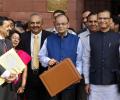
Finance Minister Arun Jaitley presented the Budget in Parliament on Saturday.

At a time when major economies have increased spending, India will have to do the same.

The finance minister continues to be backed by the same policy team in charting out the broad strategy as in the few earlier Budgets.

Government looking at cushioning slowdown due to demonetisation with sops and higher outlay for micro, small and medium enterprises, agriculture, and affordable housing.
The rise in the fiscal deficit, which is a reflection of the government's borrowing, was mainly on account of subdued tax collection. The revenue deficit also rose to 3.27 per cent, up from the revised estimate of 2.4 per cent of the GDP.
States also demanded that Budget for 2015-16 should make adequate provisions for central sales tax compensation for early roll out of Goods and Services Tax, a Constitutional Amendment Bill for which was tabled in the Lok Sabha last week.
The panel may include or seek inputs from former RBI Governor Urjit Patel, former chief economic advisor Arvind Subramanian, Sajjid Chinoy of the PM-EAC, Rathin Roy, among others.

To keep investors' confidence, however, Modi's government will need to be seen containing the fiscal deficit, while also increasing spending in key areas of the slowing economy.
This is because the bond market has factored in the Rs 4.88-trillion gross borrowing for April-September 2020.

The government on May 17 formed a five-member committee.

The government further said the gross tax revenue as a per cent of GDP is expected to increase to 12.1 per cent of GDP in 2019-20 and stabilise at that level in 2020-21 before climbing up to a level of 12.2 per cent of GDP.
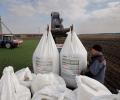
For the first time, the government is likely to dip into the Oil Industry Development Fund (OIDF) to finance part of its fertiliser subsidy programme for 2025-26, according to official sources. The finance ministry has accounted for Rs 23,000 crore in the FY26 Budget as net additional resources to be drawn from dedicated reserve funds, including the OIDF, the Agriculture Infrastructure and Development Fund, and the Universal Service Obligation Fund.

It would be interesting to see what the government proposes to investors.

Even with the possible expenditure roll-overs and off-budget financing, the fiscal deficit target will not be met. The FRBM Act, after its amendment in 2018, allows a fiscal deficit slippage of not more than 0.5 per cent for any given year, provided there are justifications. These justifications include war, national security, severe collapse in the agriculture sector, a major natural calamity, big structural economic reforms, or the decline in real output growth of a quarter by at least 3 percentage points below its average of the previous four quarters.

Finance Minister Nirmala Sitharaman's Budget proposals lay out a comprehensive road map for transforming India into a developed nation, focusing on key priorities that aim to generate ample opportunities for all citizens in "Viksit Bharat". It sets the stage for sustained economic growth, social development, and technological advancement.

The Pakistan Cricket Board (PCB) has claimed to have earned three billion rupees by hosting the ICC Champions Trophy, exceeding its target of two billion rupees.

Sitharaman does away with loans from National Small Savings Fund to Food Corporation of India.
The FRBM report, to be submitted on Tuesday, is likely to have 'excuse clauses', absolving the government of meeting its fiscal commitments under certain conditions such as war or conflict, global economic meltdowns or natural disasters.

There are several welcome standalone reforms, but these do not add up to a coherent strategy to achieve a $5 trillion economy or secure Aatmanirbharta, observes Rathin Roy.
'Union Budgets are often used as political instruments and that was the intention of this government too.' 'But while the exercise has settled two fronts, it has left open several others and this has the potential to aggravate with time,' predicts Nilanjan Mukhopadhyay.
Diesel price should be freed, open market grain purchases should be ended.

On the revenue front, the finance ministry was expecting higher proceeds from non-tax revenue.
Officials said there had been no official word or indication from the top yet. The expectation from officials is to do what they can, but it is understood that all fiscal and budgetary targets don't matter anymore.
